Why native
Florida native plants for St. Petersburg yards
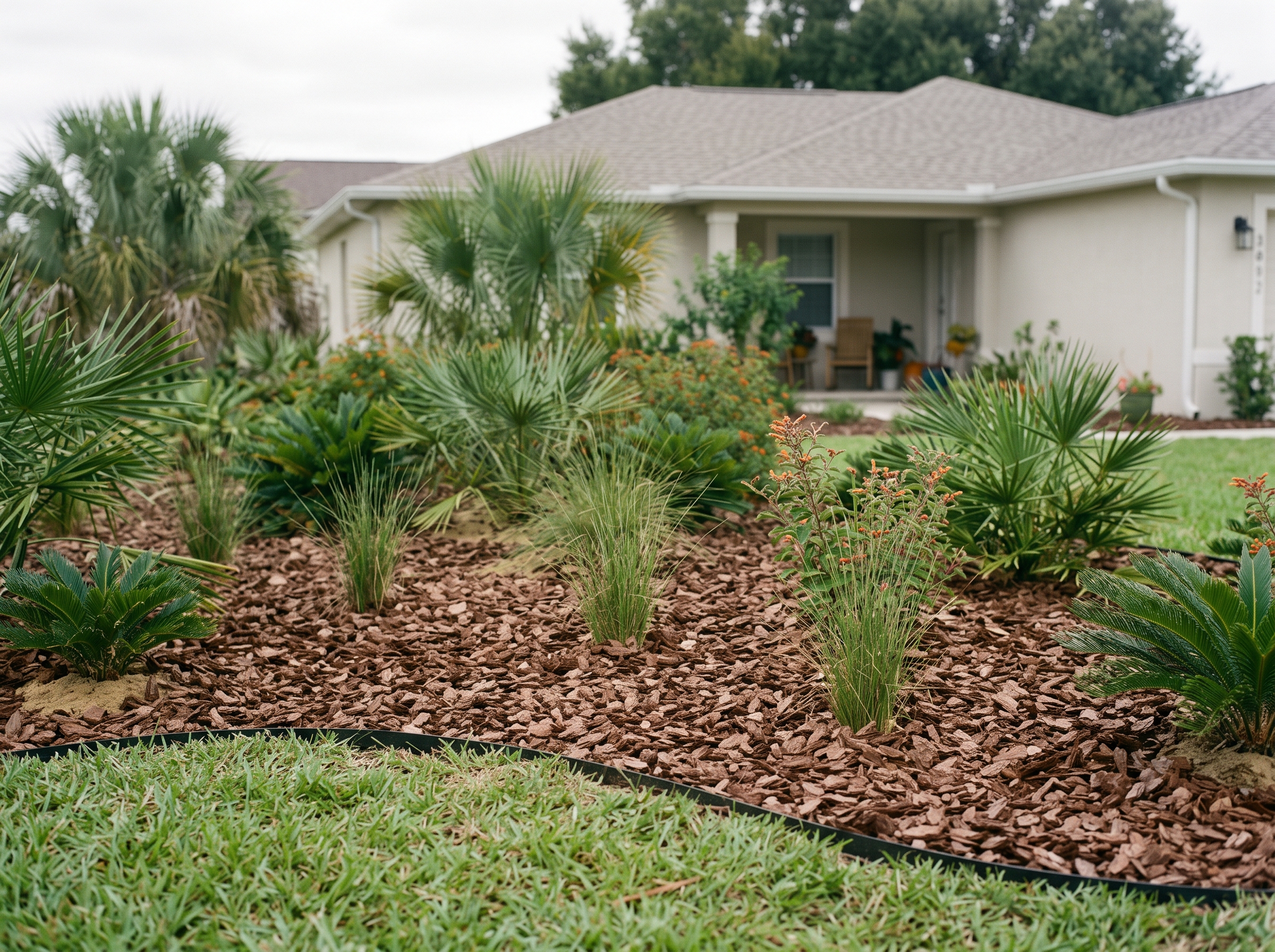
Every plant in a St. Pete yard is up against the same four things: sand that won't hold water, salt coming off the bay, a wet season that drowns roots, and a dry one that doesn't let up. Florida natives and Florida-Friendly species evolved into exactly those conditions. Most of what gets sold at the big-box garden center didn't.
- Insured
- Free on-site estimates
- Northeast St. Petersburg
The case for native
Why it matters here
Less water, permanently
An established native bed gets through a Pinellas dry season on rainfall and not much else. The water management district already limits which days you can water, and tightens that further in a drought.
Less fertilizer, by design
Pinellas County bans nitrogen and phosphorus fertilizer from June 1 through September 30, because what goes on a lawn in July ends up in the bay. Plants that belong here don't depend on feeding to look alive.
Built for wind and salt
Species that grew up on this coast are structured for it. They bend, shed leaves, and come back.
Suited to the soil
Much of St. Pete is fine sand over shell, often alkaline. Many imported plants can't take up iron there and yellow between the veins. Plants adapted to high pH don't have that fight.
Common swaps
Common here. Struggles here.
Four things we get asked to replace more than anything else, and what goes in instead.
Queen palm
Sabal palmFlorida's state tree. Handles wind and salt, and doesn't yellow out in alkaline sand.
Boxwood hedge
Simpson's stopperEvergreen, fragrant, salt-tolerant, and it doesn't rot out in a humid summer.
Ficus hedge
Walter's viburnumScreens just as well without the whitefly, and without roots going after your pipes.
Impatiens beds
BlanketflowerColor through the whole hot stretch on sand, sun and almost no water.
Local conditions
What this coast does to a yard
Sand that drains before it feeds
At high pH, iron and manganese lock up and the plant can't use them. More fertilizer doesn't fix it. We build the planting zone to hold moisture and pick species that tolerate the pH.
Salt, and how far it reaches
The waterfront edge takes direct spray; behind the house is a different environment. We plant to the exposure, salt-hardened species where the wind actually lands.
After saltwater comes through
Surge leaves salt in the root zone. Where it's practical we flush it with fresh water and replace the worst soil before replanting.
Canopy work before the season
Thinning lets wind move through a crown instead of pushing the tree over. Best done before June 1.
Not all or nothing
Native doesn't mean scrub
Native describes how we approach a yard, not a limit on what goes in it. Florida natives and Florida-Friendly species carry the design because they're the things that hold up here. If you want a particular tree, or there's something that's been in the yard for twenty years, we work with it.
The result should look designed and cared for: clean edges, layered beds, color in the right places. It just doesn't need constant water and feeding to stay that way.
Your yard
Tell us what you're working with
Send a few details and we'll set up a walkthrough. You get a written scope and a line-item price — no charge, and no obligation to book.